Catastrophic Pedestrian Accident on Market Street Secures Improvements in San Francisco

Last month marked the one-year anniversary of Thu Phan’s tragic death.  She was killed while crossing Market Street at 7th in her wheelchair.  A ban on left turns onto Market Street had already been implemented to help mitigate the dangers of the intersection with an exemption covering City vehicles under certain duties.

The family became active in fighting for safety improvements after their catastrophic loss.  Thu Phan’s sister reached out to Human Streets, Walk San Francisco, and San Francisco Bay Area Families for Safe Streets.  Walk San Francisco reports that since the catastrophic pedestrian accident that took Thu Phan’s life, Walk San Francisco and their Vision Zero Coalition have worked to address the conditions that lead to her death.

As a result of these pedestrian advocacy efforts, San Francisco has now implemented:

  • Leading Pedestrian Intervals (LPIs): walk signals to provide people crossing with a head start at six intersections along Market, including 7th;
  • More visible turn restriction signage at Market & 7th;
  • A City Administrator’s policy memo, which explicitly states that City drivers are not exempt from turn restrictions (a key factor in Thu Phan’s death);
  • A new, required driver training and education program for all City staff that specifically highlights how to drive safely around seniors and people with disabilities.

This last safety improvement deserves an extra comment.  Seniors are five times more at risk of a serious/fatal injury as pedestrians than younger adults according to information gathered by Walk San Francisco.

Here are a few more statistics that may make you realize the importance of a pedestrian accident lawyer, or a catastrophic injury attorney for when a loved one is fatally or catastrophically injured by a vehicle:

  • In 2015, 5,376 people were killed in pedestrian/motor vehicle crashes – nearly 15 people per day (NHTSA)
  • California is the state with the highest number of pedestrian fatalities (NHTSA)
  • 60% of all San Francisco’s traffic deaths are people walking – 4X the national average (Walk SF)

If you or a loved one is hit by a vehicle, know your rights and speak with a pedestrian accident lawyer in San Francisco or Paso Robles.  At Rahman Law PC, we offer personalized attention to every client in a supportive and respectful way.  We have offices in San Francisco and Paso Robles, California.
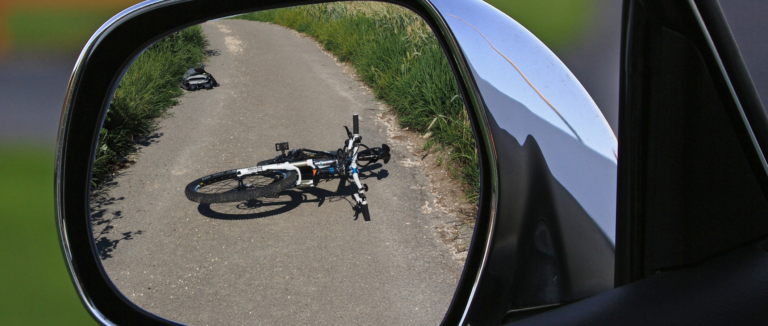
When the Worst Happens on Your Bike: Catastrophic Injury

collision-catastrophic

Prevention

We all like to talk about it: how to avoid the most common collisions on your bicycle, adding bicycle lanes, lights on bikes for visibility, law and regulation advocacy to prevent injuries… but all of these conversations come in the wake of something we don’t like to talk about – the catastrophic injury.  We know which collisions on a bicycle are the most common because cyclists end up in the hospital for them, and that lights save lives because people on bicycles are killed every year when the driver says they “didn’t see them.”  And so, we change the laws and regulations based on statistics of injuries and fatalities.  This is a cold, sad truth.  What if it happens to you?

Catastrophic Injury

Catastrophic injury covers a spectrum of the unthinkable: wrongful death, dismemberment, paralysis, severe brain damage, spinal cord injury, and the like.  These injuries are life changing and life ending.  This is why no one likes to talk about them.  So rather than go into those details, I’d like to talk to you about what to do if this happens in your life (to you or a loved one).

  1. Time Limits. Legal cases have time limits known as statutes of limitations.  They are different for their type of case.  It prevents someone from suing over a slip-and-fall that happened 80 years ago which would seem unreasonable.  So it is incredibly important that you start having conversations with a catastrophic injury attorney early to determine your time limits.
  2. Debt. The medical bills alone can be life changing for families.  This is actually another reason why talking to a catastrophic injury attorney early is valuable.  We can help you put a hold on those bills so that you are not being asked to pay them right now.  The payee will wait until the settlement of your case to be paid and if you’ve seen the tens-of-thousands of dollars in medical bills generated by an automobile’s collision with a bicyclist, you’ll understand what a relief that can be.  Insurance only covers so much, from either party.
  3. The Future. A catastrophic injury isn’t about replacing a damaged bicycle and fixing a dented fender.  Future lost wages, future increased medical costs, ongoing rehabilitation, loss of enjoyment of life, permanent disability coverage, and mental anguish are just a few of the considerations for the future for your and/or your family in the event of a life changing injury or wrongful death scenario. An experienced catastrophic injury attorney can help you plan, estimate, and navigate these considerations.

We’re here to help!  The experienced attorneys at Rahman Law PC are riders, too.  We understand rider safety and believe an ounce of prevention is absolutely worth a pound of cure.  However, when the unthinkable happens, we’re ready for that, too.

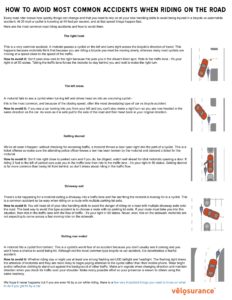
If you’d like more information on preventing some of the more common bicycle collisions, the following five examples from Velosurance can help you avoid the most common collisions when riding your bicycle on the road.  We are proud to be a trusted partner in their network of legal and bicycle repair shops (obviously, we’re the legal aid).

Download here: how-to-avoid-most-common-accidents-when-riding-on-the-road-handout

how-to-avoid-most-common-accidents-when-riding-on-the-road

What to Ask When a Dog Attack Happens – Tips From a Dog Bite Attorney

dog bite attorney san franciscoThere is no doubt the adrenaline is going to be pumping through your system at full speed if you or a loved one is bit by a dog, but knowing what to do when a dog bite happens before the attack might help you find the clarity you need to better protect yourself.  There are three phases in the timeline of a dog bite: (1) the scene; (2) the first few hours after; and (3) the following weeks.

Phase 1 – The Scene of the Dog Bite

When the attack happens and someone has been bitten, the victim should come first.  If they need emergency assistance, call 911.  Secondary to that, get as much information as you can:

  • Who owns the dog (name, address, phone number)
  • Witness(es) information (if any – name, phone number)
  • The veterinarian of the dog (they’ll have important vaccine information)
  • Is the rabies vaccine current?

It’s worth noting here if you think there was any criminal activity going on when the dog bite happened (i.e. you stumbled into a dog fighting ring), you may not want to be asking questions.  Instead, get to safety and call 911.

Phase 2 – The First Few Hours After The Dog Bite

Medical care for the victim is crucial first and foremost.  According to the Centers for Disease Control and Prevention (CDC) almost 1 in every 5 bites becomes infected.  Think about how often the average person brushes their dog’s teeth!  Medical care is still important even if the bite came from a dog within your own circle of family and friends and you don’t plan to seek legal counsel from a dog bite attorney.  In fact, the CDC reports most bites are from dogs that are familiar to us.  Because animal bites are prone to infection, it is often worth the trip to a local urgent care facility rather than risk the infection.  Bring the information you collected from the owner of the dog with you, especially information regarding the dog’s last rabies vaccine.  You may call the dog’s veterinarian if you need to verify the last rabies vaccine date.  The urgent care clinic may also want to know about your last Tdap vaccine, so call your primary care doctor if you don’t remember before you go, too.  Don’t let not having either of these two items prevent you from going to the urgent care – just know that these are items commonly asked about even if rabies is not suspected.  Be sure to get copies of everything from your visit, including the bill,  Even if you have not yet decided about seeking damages from the owner, a dog bite attorney will want to see it if you look into your options.   You may still be in shock if you’re the victim.  It’s ok to write down what you need and dates you’ve called about to take in with you.

Phase 3 – The Weeks Following the Dog Bite

After about a week or two following the attack, the victim will have a better idea of just how much damage (physical, emotional, and financial) has been done and may still be coming.  The initial shock should be settling by now but any deeper trauma might persist.  This is an excellent time to reach out to a dog bite attorney for a free case evaluation/consultation.

  • What have the medical costs been to date?
  • Will there be ongoing medical costs?
  • Did the victim miss any work?
  • Has the victim needed therapy or may possibly need therapy?
  • Was there any property damage (clothing, bicycle, motorcycle, etc.) due to the dog attack?
  • Is further action needed against the dog (is it vicious/dangerous)? – Remember dog owners are liable under the law; you do not need to prove the dog was vicious to have a case, but if the dog is vicious you may wish to seek further action to protect others in your community.

The attorneys at Rawman Law PC in San Francisco and Paso Robles are here to help you navigate the stressful situation of a dog bite lawsuit.  Dog bites vary in their degree of damage but the liability remains on the owner of the dog.  We’ve seen damages range from medical costs for a visit to the urgent care clinic and lost wages, to facial reconstruction surgery, to catastrophic loss-of-life claims.  Every dog bit incident is unique which means the best way to understand your options is to contact a dog bite attorney like the ones at Rahman Law PC as soon as you need assistance.


Receive new blogs via email:

[email-posts-subscribers namefield=”YES” desc=”Subscribe to receive our blogs in your inbox!”]

Speed Kills: Pedestrian Collisions Can’t Be Ignored

rahman law in plaintiff magazine

The lawyers at Rahman Law are committed advocates of pedestrian rights, which means we represent pedestrians who have been hit by cars in California, particularly in urban areas on the central coast like San Francisco.  But you don’t have to be in an urban area to find yourself the victim in need of a pedestrian accident lawyerWe are all pedestrians.  Think about it: 100% of our commutes involve walking, even if it’s just to and from our car.

Yet we don’t normally associate ourselves as pedestrians and this mindset has led to a tragic “blame the victim” social stigma.  Honestly, what’s the first thing that comes to mind when you hear someone was struck by a vehicle?  Right now, you’re probably wondering if they were playing Pokémon Go with their eyes glued on their smartphone and not traffic, but we shouldn’t jump to conclusions that the victim was at fault – EVER.  Both sides have a story, and in a situation where tonnage rules, the pedestrian is the one to sustain the more serious injuries.

Shaana Rahman, a pedestrian accident lawyer and the principal and founder of Rahman Law PC, was published last month in Plaintiff Magazine regarding her viewpoint as a pedestrian accident lawyer representing the family of a child hit in a crosswalk on his way to school.  The local media immediately fell to whispering about the possibility that the child was not paying enough attention to his surroundings and locals wanted to know if the boy was even in a crosswalk or had been jaywalking.  This struck Ms. Rahman as yet another case where blame was immediately thrown onto the victim falsely.  Where has our empathy for pedestrian accident victims gone?

Here is an excerpt from the magazine about her insight as a pedestrian accident lawyer in this instance:

The fact is one case in particular has stuck with me over the years and caused me to re-examine pedestrian cases. It was a case in which I represented the family of a 13-year-old child hit in a crosswalk on his way to school. The boy, hit by a young driver coming off a late shift at a Krispy Kreme, lived but suffered irreparable brain damage that left him in a persistent vegetative state. The first thing that struck me were the initial whispers in the media and from locals speculating that the child was wearing headphones, or may have been a foot or so outside the crosswalk, or perhaps darted out into the street. None of those things were true, of course, but it was interesting to witness the subtle bias we have in urban areas against pedestrians, despite the fact we are all pedestrians at some point or another. For a long time, we have had a very “blame-the-victim” mentality when it comes to pedestrian collisions.

Also, despite the clear responsibility of the driver for the collision, my clients insisted that their son wouldn’t have been hit if there had been a stop sign at the intersection, like the residents of the neighborhood had been demanding. This led me down a road of many, many public records act requests and fights with the City Attorneys’ office. The evidence I uncovered was really astounding.

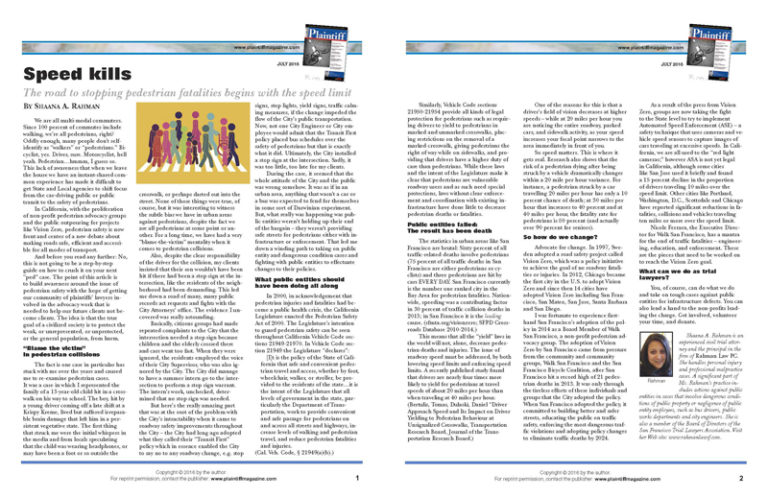
You can read more about the injured boy and the case Ms. Rahman fought in her article Speed Kills: The Road to Stopping Pedestrian Fatalities Begins with the Speed Limit in July’s issue of Pedestrian Magazine here:

Plaintiff Magazine Pedestrial Accident Lawyer

A Bicycle Accident Attorney Who Rides, Too

If you’ve been injured while on a bicycle, you want a bicycle accident attorney who rides, too.  We’ve spent over a decade representing cyclists and motorcyclists who’ve been injured.  It’s simple, really.  In my office, we ride, so we know what it’s like out there and we know how to tackle issues that are unique to two-wheeled collisions.


The number of cyclists in California increases each year, and with this increase comes an increase in collisions both with other vehicles and single bicycle collisions caused by roadway defects. While some public entities have tried to evaluate increased safety measures to decrease conflicts between cyclists and other modes of transportation, by and large these efforts have not gone far enough.  We advocate on behalf of cyclists (because remember, we ride, too!) for increased efforts in safety by sponsoring local bicycle coalitions, attending City hearings, and helping to educate the public on ways to reduce the number of bicycle accidents in California.


There are a lot of personal injury lawyers, but my firm is different.  At Rahman Law, we guide you through the legal process and we listen; we get to know you and we fight for your rights.  I have successfully litigated hundreds of cases and I am skilled at getting cases settled.  I am devoted to taking on insurance companies and big corporations to get injured people the compensation the law says they are entitled to.  I’ve been a lawyer in San Francisco for 17 years and now am also part of the central coast community with a second law office in Paso Robles bringing the resources of a big city law firm to you.  Rahman Law PC handles personal injury cases on a contingency fee basis; you don’t pay attorneys’ fees unless we get a monetary recovery for you.  If you’ve been injured, call someone who truly cares and get a free consultation with Rahman Law at rahmanlawsf.com.

When Adding Bike Lanes Actually Reduces Traffic Delays

In New York, smart street design helped the city have its safety and its speed, too. 

A great article on Mother Jones about “level of service” and how California is a state that is leading the charge against it. “Level of Service” is the argument against implementing bike lanes for fear that less road space for cars will cause more traffic and delays. Mother Jones explains a new report by the New York City Department of Transportation which shows car traffic can be maintained while increasing rider safety.

http://www.motherjones.com/environment/2014/09/adding-bike-lanes-reduces-traffic-delays-new-york-city


The Status of Bay Area Bike Share

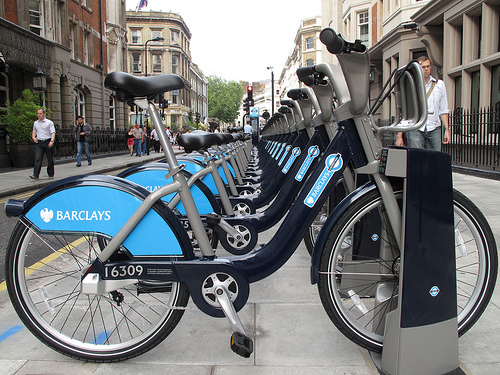
bikeshare

(Source: http://thecityfix.com/blog/bike-sharing-the-newest-mode-of-public-transport/)

Happy belated one-year anniversary to Bay Area Bike Share!

Unfortunately, financial problems at the program’s operator and supplier have held up plans to add bikes and locations. According to representatives of SFMTA, the response to the program has been overwhelmingly positive, and is considered a success. The system has 5,000 annual members and 28,000 “casual” members with the bikes being used an average of 3 times a day.

Despite the popularity, reported success and plans for expansion, the program is facing financial problems. The city currently has approved funding to add 1,000 more bikes system wide to 17 new locations, including stations the Castro and the Mission. On top of that, the SFMTA is seeking $25 million in private funding in order to add 3,000 more bikes at 250 more stations. However, talks with private companies are stalled because Bay Are Bike Sharing’s bike and bike software supplier—Public Bike System Company (PBSC)—has filed for bankruptcy and been sold to another company.

Regardless, it seems that expansion of the program is going to happen, but it might not be as fast as SF bike riders want or need.

If you ever need a bicycle accident attorney in San Francisco, Paso Robles, or the surrounding Central California Coast area, contact us for a free consultation.

(Source: http://ww2.kqed.org/news/2014/08/29/bay-area-bike-share-expansion-stalls/

To Veto or Not to Veto?

Not too long ago, Governor Jerry Brown aided making California a safer biking and walking community by passing the Three Feet for Safety Act, effective since September 16, 2014, which requires drivers to give at least three feet’s space in between any part of the motor vehicle and any part of the bicycle or its operator when overtaking or passing a bicycle. The approval of this bill was a significant accomplishment to the growing bike-safety movement that persistently promoted street safety through campaigns such as “Be Nice, Look Twice” and “Vision Zero,” which encourage bicyclists and pedestrians to take matter into their own hands and take extra caution when sharing the street with motor vehicles. However, despite Governor Brown’s approval of AB 1371, three other bills that purported to improve road safety have recently been vetoed:

SB 1151: This bill would add Section 42011 to the Vehicle Code, which would “require that an additional fine of $35 be imposed if the violation occurred when passing a school building or school grounds, as specified, and the highway is posted with a standard “SCHOOL” warning sign and an accompanying sign notifying motorists that increased penalties apply for traffic violations that are committed within that school zone. In addition, this bill would require “that these additional fines be deposited in the State Transportation Fund for purposes of funding school zone safety projects within the Active Transportation Program.

Governor’s Veto Message:

“Increasing traffic fines as the method to pay transportation fund activities is a regressive increase that affects poor people disproportionately. Making safety improvements in school zones is obviously important, but not by increasing traffic fines.”

(http://leginfo.legislature.ca.gov/faces/billNavClient.xhtml)

AB 2337: This bill would prohibit the department from reinstating a person’s privilege to drive a motor vehicle until the expiration of 2 years after the date of revocation and until that person gives proof of financial responsibility, when that person is the driver of a vehicle involved in an accident resulting in death or permanent, serious injury to another person, and the department receives a duly certified abstract of the record of a court showing that the person has been convicted of failing to fulfill the requirements described above.

Governor’s Veto Message:

“While I consider hit-and-run collisions to be very significant events, current penalties seem to be at appropriate levels.”

(http://leginfo.legislature.ca.gov/faces/billNavClient.xhtml?bill_id=201320140AB2337)

AB 1532: This bill would provide that a driver of a vehicle involved in an accident where a person is struck shall immediately stop the vehicle at the scene of the accident and provide specified information including, but not limited to, his or her name and current residence address. A violation of these provisions would be either an infraction, punishable by a fine not exceeding $250, or a misdemeanor, punishable by imprisonment in the county jail for 6 months, or by a fine not exceeding $1,000, or by both, and the Department of Motor Vehicles would be required to immediately suspend the driver’s license of a convicted driver for 6 months.

Governor’s Veto Message:

“California has a very extensive set of criminal laws and penalties. This measure would create a new crime that includes a fine and penalty assessments up to $4,231 and possible jail time of six months. I don’t find sufficient justification for creating a new crime when no injury to person or property occurred. I think current law is adequate.”

(http://leginfo.legislature.ca.gov/faces/billNavClient.xhtml?bill_id=201320140AB1532)

If you ever need a bicycle accident attorney in San Francisco, Paso Robles, or the surrounding Central California Coast area, contact us for a free consultation.

Three Feet for Safety Act

Three-Feet-for-Safety-Act (Source: http://theavtimes.com/2014/09/15/three-feet-for-safety-act-takes-effect-tuesday/)

This is the moment all bicycle advocates have been waiting for- after years of joined effort by advocates, the “Three Feet for Safety Act” signed by Governor Jerry Brown finally came into effect September 16, 2014. This act ensures that motor vehicle drivers give bicyclists at least three feet of space when passing them. The following are the newly implemented rules in the “Three Feet for Safety Act”:

21760. (a) This section shall be known and may be cited as the Three Feet for Safety Act.

(b) The driver of a motor vehicle overtaking and passing a bicycle that is proceeding in the same direction on a highway shall pass in compliance with the requirements of this article applicable to overtaking and passing a vehicle, and shall do so at a safe distance that does not interfere with the safe operation of the overtaken bicycle, having due regard for the size and speed of the motor vehicle and the bicycle, traffic conditions, weather, visibility, and the surface and width of the highway.

(c) A driver of a motor vehicle shall not overtake or pass a bicycle proceeding in the same direction on a highway at a distance of less than three feet between any part of the motor vehicle and any part of the bicycle or its operator.

(d) If the driver of a motor vehicle is unable to comply with subdivision (c), due to traffic or roadway conditions, the driver shall slow to a speed that is reasonable and prudent, and may pass only when doing so would not endanger the safety of the operator of the bicycle, taking into account the size and speed of the motor vehicle and bicycle, traffic conditions, weather, visibility, and surface and width of the highway.

(e) (1) A violation of subdivision (b), (c), or (d) is an infraction punishable by a fine of thirty–five dollars ($35).

(2) If a collision occurs between a motor vehicle and a bicycle causing bodily injury to the operator of the bicycle, and the driver of the motor vehicle is found to be in violation of subdivision (b), (c), or (d), a two –hundred–twenty–dollar ($220) fine shall be imposed on that driver.

(f) This section shall become operative on September 16, 2014.

Added Sec. 3, Ch. 331, Stats. 2013. Effective September 16, 2014.

As a rider and supporter of the biking community, Shaana Rahman anticipates that the “Three Feet for Safety Act” will aid in making San Francisco a truly bike-friendly city.

If you ever need a bicycle accident attorney in San Francisco, Paso Robles, or the surrounding Central California Coast area, contact us for a free consultation.

(Source: https://www.dmv.ca.gov/pubs/vctop/d11/vc21760.htm)

Study Confirms Cyclists Feel Safer in Bike Lanes


Protected-Bike-Lanes-Mean-Business-e1398201572990

(Source: http://www.sfbike.org/news/protected-bike-lanes-mean-business-in-sf-and-around-the-country/)

This June, the National Institute for Transportation and Communities released the final report of the first intensive study conducted on “Evaluating Protected Bike Lanes in the U.S.” The growing presence of various bike-friendly communities around the U.S.  and consequently  increasing bike traffic undoubtedly led the institute to compile and evaluate data that will aid in developing safer biking communities.

The study included data that examines protected bicycle lanes from five cities: Austin, TX; Chicago, IL; Portland, OR; San Francisco, CA; and Washington, D.C. This study purports to indicate the effects of protected bike lanes through surveys, video observation of ridership and interaction between bicyclists, motor vehicle drivers and pedestrians. The study gives strong indication that the vast majority (approximately 91%) of residents in a particular city support the presence of bike lanes: “residents and bicyclists indicated that any type of buffer shows a considerable increase in self-reported comfort levels over a striped bike lane…”  The following are few of the various data revealed in the report:

  • Nearly all cyclists (92%) who used the intersections with separate bicycle signal phases agreed that they felt “safe” when riding through the intersection. This exceeded all other intersection designs and is the only design evaluated where the protected lane carries all the way to the intersection.
  • Designs with more physical separation had the highest scores for cyclist comfort. Buffers with objects (e.g. flexposts, planters, curbs, or parked cars) had higher comfort levels than buffers created only with paint
  • Nearly every intercepted bicyclist (96%) and 79% of residents stated that the installation of the protected lane increased the safety of bicycling on the street. These strong perceptions of improved safety did not vary substantially between the cities, despite the different designs used.
  • Three in four residents (75%) said they would support building more protected bike lanes at other locations. This support was strong even among residents who reported “car/truck” as their primary commute mode —69% agreement).
  • Overall, 91% of surveyed residents agreed with the statement “I support separating bikes from cars”. This includes primary users of all modes (driving, walking, transit, and bicycling).

The report is full of data that generally indicate one clear message: Protected bike lanes are good and wanted by not only bikers, but also by pedestrians and motor vehicle drivers. This report is extensive in its research and, fortunately, includes surveys conducted on our very own San Francisco residents, solidifying the reasons why this city’s movement for a more bike-friendly environment is not for nothing.


(Source:  http://ppms.otrec.us/media/project_files/NITC-RR-583_ProtectedLanes_FinalReportb.pdf)