The personal injury lawyers at Rahman Law PC are powerful advocates for people who have been injured through no fault of their own. These personal injury blogs contain articles with information relating to personal injury law, personal injury lawyers, and personal injury cases of interest.
SAN FRANCISCO, California – /ReleaseWire/ 3/12/18 – Rahman Law PC announces their renewed selection to the Top 20 Personal Injury Lawyers in San Francisco by Expertise. Rahman Law PC was among the top of the list in 2017 and is pleased to announce their standing on the list a second year in a row as a San Francisco personal injury lawyer professional among more than 25 variables in this coveted, hand-picked list.
Expertise reviewed 189 personal injury lawyers in San Francisco utilizing five categories in selecting Rahman Law PC as one of the top personal injury lawyers in San Francisco: reputation; credibility; experience; availability; and professionalism. Expertise reviewed Rahman Law PC’s customer satisfaction ratings and recommendations, accreditations, awards, education and experience of the team, responsiveness to both clients and new business, and dedication to quality. As personal injury lawyers, Rahman Law PC has a proven track record of customer service and client dedication, which is reflected in their review. Rahman Law PC’s principal and founder is a member of the Multi-Million Dollar Advocates Forum, was recognized as a Top 40 and 40 Attorney and a Top 100 Trial Lawyer, named an AV Preeminent Woman Lawyer by Martindale-Hubbell®, and has been a tap-rated personal injury attorney with Super Lawyers® for Northern California since 2012. Currently, Ms. Rahman and Rahman Law PC hold several distinguished titles of professional excellence, including Martindale-Hubbell’s AV Preeminent Peer Review Ratings™ for the Highest Level of Professional Excellence and Avvo’s Superb Rating as a Top Rated Personal Injury Attorney. All of these awards and ratings contributed to the review conducted by Expertise.
Expertise is a Seattle, WA based company. They will not accept money to include a business and utilize proprietary research including a manual review process to make their selections covering 85% of the United States. They aim to provide their users with the “confidence to find and connect with exceptional businesses that are objectively qualified and authentically well-reviewed” (expertise.com).
“Our team will continue to put our clients first,” said Ms. Rahman. “As personal injury lawyers in San Francisco, we work with bicyclists, pedestrians, and motorcyclists. We have a company philosophy of treating our clients with respect and advocating within our community for their rights and safety. Being named as one of the best personal injury lawyers in San Francisco by Expertise two years in a row means a lot to us; it shows us our clients feel taken care of.”
Rahman Law PC also launched a new website this year to better serve potential clients. The website includes two free PDF downloads, a free consultation request form, and insights from the team from their blog about various topics on personal injury rights, bicycle and pedestrian safety, motorcycle awareness, and advocacy events.
About Rahman Law PC
The personal injury lawyers at Rahman Law PC are powerful advocates for people who have been injured through no fault of their own. What makes Rahman Law PC different from other personal injury law firms is they care about what happens to their clients; they aggressively advocate for their clients’ interests and have a personal relationship with each client, taking the time to listen and figure out solutions that make sense from a legal point of view but also from a human perspective. By providing the highest quality legal services to those who have been injured or have suffered wrongdoing at the hands of other individuals, corporations, or public entities, the personal injury lawyers and trial lawyers at Rahman Law PC have a proven track record of results and have successfully recovered millions of dollars for clients throughout California. Rahman Law PC offers clients attentive service backed with big firm experience, making them ready to take on any opponent. To learn more about the personal injury lawyers at Rahman Law PC, visit http://www.rahmanlawsf.com or call (415) 956-9245 in San Francisco, (805) 619-3108 in Paso Robles, California.
In California especially, we protect the rights of the disabled so that they, too, are free and equal. As pedestrian accident lawyers in San Francisco and Paso Robles, California, we advocate for all pedestrian rights. Recently, principal and founder Shaana Rahman published the following in Plaintiff Magazine:
The Unruh Act broadly provides that all persons within California are “free and equal” and “are entitled to the full and equal accommodations, advantages, facilities, privileges, or services in all business establishments of every kind whatsoever.” (Civ. Code, § 51(b).) The California Disabled Persons Act (DPA) additionally provides that individuals with disabilities “shall be entitled to full and equal access, as other members of the general public,” to places to which the general public is invited. (Civ. Code, § 54.1(a)(1).) Both Acts broadly prohibit discrimination without qualification and require equal treatment in all public accommodations. (Civ. Code, §§ 51 & 54.)
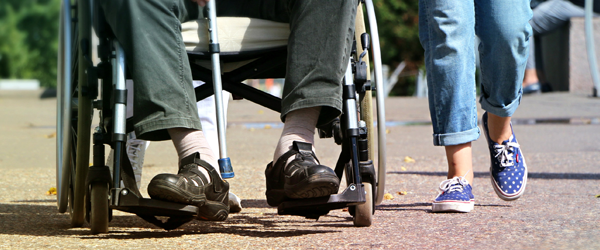
Access to the disabled is non-discriminatory. Wheelchair access, persons with vision impairments, those with crutches or walking assistive devices, service animals… The legislation from the Supreme Court, the DPA, the Americans with Disabilities Act (ADA), and the Unruh Act all lead to the same goal: “the commendable goal of total integration of handicapped persons into the mainstream of society.” (In re Marriage of Carney (1979) 24 Cal.3d 725, 738, 740.) Preventing pedestrian accidents for the disabled becomes a topic of free and equal access provided that doing so would not “fundamentally alter” the nature of the accommodation per the ADA.
Full and equal access includes the sidewalk. Uneven sidewalks can be an inconvenience to a young, healthy parent pushing a jogging stroller, but are impermissible to many wheelchairs. In San Francisco and Paso Robles, the streets and sidewalks are old due to the age of the cities, resulting in gaps, cracks, and deviations in the sidewalks greater than 1”, which can be hazardous to anyone and potentially result in a pedestrian accident. If you see a dangerous sidewalk, report it. If you are a property owner, it may be under your duty of care to repair it. Remember, the general public is entitled to equal access and many cities have ordinances placing the burden of repair for the sidewalk on the property owner. Courts have already been looking to adjacent property owners to warn and protect the public to prevent pedestrian accidents.
Courts have held a landowner who exercises possession or control over an adjacent sidewalk has a duty to warn or protect pedestrians and others who foreseeably may be in the area from dangerous conditions on the sidewalk. (See, Alpert v. Villa Romano Homeowners Ass’n (2000) 81 Cal.App.4th 1320, 1335-1337.) In Alpert v. Villa Romano Homeowners Assoc. (2000) 81 Cal.App.4th 1320, the court held that a landowner owed a duty of care to pedestrians using a sidewalk on adjoining property, where the defendant knew the sidewalk was hazardous due to roots from trees located on the defendant’s property. In doing so, the court analyzed the impact of Civil Code 1714(a), Streets and Highways Code 5610, and other authorities in determining liability. In essence, Section 5610 of the Streets and Highways Code established the rule that the owner of the property adjoining the sidewalk has a duty to maintain it. (Ibid.)
Now is a great time to go outside before the rain comes and take a look at the sidewalks around you. Are they reasonably free of defects to avoid pedestrian accidents? Do they allow free and equal access to disabled pedestrians? Are they on or adjacent to yours property? If you have concerns about liability should a pedestrian accident occur, give us a call. The lawyers at Rahman Law PC have handled many pedestrian accident cases and can help you understand the ordinances in your area.
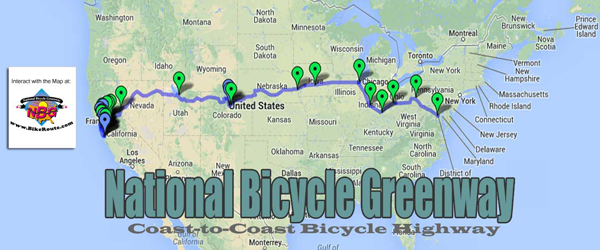
This podcast was recorded in December of 2017 with Martin Krieg from the national nonprofit National Bicycle Greenway and Shaana Rahman of Rahman Law PC.
It is part of the Mountain Movers Podcast Series. The series focuses on people who are taking giant steps for the betterment of cyclists and the planet itself. Mr. Krieg recorded from Indianapolis. Shaana Rahman of Rahman Law PC discusses her life riding bicycles, working as a bicycle accident attorney, advocating for bicyclist safety, riding in San Francisco, and the San Francisco Bicycle Coalition. Click below to visit the National Bicycle Greenway website with the original podcast, or listen here:
Martin: Welcome the national bicycle greenways mountain mover podcast series. Here you will get up close and personal with people who are taking giant steps for the betterment of cyclists and for the planet itself.
Martin: With gratitude to Shaana Rahman of Rahman law in San Francisco California for waiting for me to get set up here in Indianapolis. I was finally able to record our long-scheduled podcast. As such I can finally show you the rich genuine kind person I’ve had the chance to work with for these last couple of years. At long last I’m able to show you a woman who mixes professionalism with warmth in our important service to cyclists who have been compromised by motorists.
Martin: Hey how are you doing today Shaana?
Shaana: I’m doing great Martin, how are you?
Martin: I’m doing great thanks for asking and now we’re just going to jump right into because there’s so much about Shaana Rahman that I need for the guy that bicycles [01:08 inaudible] to be able to understand. So Shaana before we get into bikes in law, where’d you grow up at?
Shaana: I grew up in Long Island, New York.
Martin: Is there a city out there that you grew up in?
Shaana: Massapequa, Nassau County.
Martin: Massapequa, huh okay. Did you ride a bike there much?
Shaana: I did, I had my first about my first red Schwinn when I was a kid with some babysitting money I think. It wasn’t my first bike, the first bike I bought myself.
Martin: Really! Was it like a Schwinn varsity or something like that?
Shaana: It was a baby bike. So it wasn’t even a ten-speed. The Varsity was the second one. But it was like a thick Schwinn with no hand brakes.
Martin: So, it is a coaster brake? You step on the pedal.
Shaana: Yeah.
Martin: Really?
Shaana: It was bright red.
Martin: Where’d you get the money for it? You say you bought it. Did you have a paper route?
Shaana: Yes.
Martin: Oh you did?
Shaana: Yeah, my brother and I did. I would help him, we’d split it. We were industrious kids because we grew up kinda poor. We’d do our jobs and make money.
Martin: Yeah wow it’s like I can’t tell you how many bikes and things I bought it with a paper on money. You know kids don’t have that luxury anymore. So, I guess probably I’m going to skip maybe a few years you were a kid in Long Island, there was a lot of riding around there? Do you ride much?
Shaana: Every day, yeah. It was a time when you’d just get on your bike, at like, you know 6/7/8, and our parents didn’t care, and we’d ride in a group. We’d go all through the neighborhood. You know, back then no helmets, no nothing – but big wide streets, and it was safe, and it was the thing that our parents would let us do.
Martin: Did you ever go on long rides in long island?
Shaana: Yeah, we used to do our long ride during summer. We used to ride out to jones beach.
Martin: Wow! Did ever make it up to port Jefferson?
Shaana: We couldn’t ride that far.
Martin: How long is long island anyway? Just curious about hundred miles.
Shaana: Probably at least a hundred miles.
Martin: Yeah that’d be right okay and so like you were riding your bike all the way through as a kid did you ride in high school too?
Shaana: Yeah. Yeah in high school. When I was in New York in high school, I used to ride my bike in, get to the bus take it to high school. That was my joined varsity.
Martin: That was in New York City then?
Shaana: No still in Long Island.
Martin: Okay in Long Island still okay. So, you used to ride your bike to school or ride your bike to school. Really? How cool is that? What was the name of your high school just for fun?
Shaana: Massapequa high school
Martin: Ah so okay. How about college? Where did you go to college at?
Shaana: I only moved out to California and I went to college at Santa Clara.
Martin: Yeah, your whole family moved out there?
Shaana: Yep.
Martin: And what did you lived in Santa Clara?
Shaana: We moved out to Santa Cruz and then [05:15 inaudible]
Martin: You are kidding me. So, you are in Santa Cruz in the early 90s possibly too?
Shaana: I moved out there [05:29 inaudible]
Martin: [05:28 inaudible] earth quake you were gone. So, you weren’t there that long?
Shaana: Yeah, I was there about 3 or 4 years. Then I [05:38 inaudible] first year college I lived in [05:45 inaudible] over the hill. Highway 17 was basically closed.
Martin: Yeah, I rode my bike on that one. It was very, very surreal experience. It was crazy crazy. Wow so you’re a Santa Cruz kid kind of sort. Wow! Wow! That’s amazing. You went to Santa Clara, went to school of the Jesuits.
Shaana: I did. They had the best bar. No one knows it. The Jesuits resident had the most elaborate, most impressive bar [06:23 inaudible]
Martin: You are kidding me, on campus?
Shaana: On campus. [06:27 inaudible]
Martin: So, what do you mean? It was like a bar that the drinking for alcohol?
Shaana: It was like a parlor room. Like a [06:46 inaudible] parlor room with [06:50 inaudible]
Martin: Anybody can use it huh?
Shaana: Not exactly. You have to be invited by the Jesuits.
Martin: So, it wasn’t just any student at Santa Clara could go to the Jesuits bar. You have to be invited by the priests, gotcha. Wow! And then you went from a catholic Santa Clara, catholic school to a catholic law school correct?
Shaana: I did. [07:25 inaudible]
Martin: Okay wow so you went from Santa Cruz to Santa Clara to San Francisco all the way up to peninsula and ended up stuck in San Francisco and we spoke the other day you were doing personal injury law. So, you start doing personal injury law for the longshoremen back pretty much when they ran San Francisco. You were saying that you came on board with them when they were starting to shut the ports down, is that correct? Can you tell us a little bit more about that?
Shaana: That’s right. Put myself [08:03 inaudible] longshoremen and when they got hurt at work. So, it’s more like workers comp former longshoremen and it was at a time [08:16 inaudible] of longshoremen. It was when they were starting to close the ports. So those jobs were getting a little bit scarcer. So, these were almost all men, but some women, these folks really really really wanted to work and so even when they were hurt, really bad things, bad things would happen at longshoremen. You know they would get in a hole and covered with product and they’d have pallets on them, they would have [08:47 inaudible] ripped off.
Martin: Tell us about the path you took before you started fighting for the rights of cyclists. When did you become a bike commuter, how did that all kind of evolved?
Shaana: It’s hard to say you know when I was, so I grew up riding a bike obviously and then when I lived in Santa Clara through college, it was great bike riding in Santa Clara you know to and from school and around. Because big flat wide streets and back then not a lot of traffic there and then you know after I had moved up to San Francisco, I didn’t ride for a while. Because it was kind of terrifying to me so and I didn’t have a lot of time. Because I was in law school and starting my first law job. So, I was working probably 60,70,80, 90 hours a week you know and then when I got my first plaintiffs job working for a firm representing injured people, I started doing a lot of bicycle and motorcycle cases. So, representing the rights of cyclists and motorcyclists and that’s when I started getting back into getting back on the bike in San Francisco.
Martin: Okay great and were you member of the SFBC back then?
Shaana: I became a member of the SFBC when I opened my firm about ten years ago.
Martin: Okay that would have been 2004 or so.
Shaana: 2007 yeah.
Martin: Okay great. Were you active with the SFBC?
Shaana: I have been active with them for the last ten years. I’ve had pleasure of sponsoring a number of their programs over the years and attending all their great events and the most recent thing I’ve been doing with them is sponsoring a fairly new program, it’s their Women who Ride program and it’s basically for the social and educational program for women riders. So, they do good rides and they also put on presentations about things that might be relevant to riders.
Martin: Wow! So how do you feel about riding in San Francisco now? Have you gotten over your fear?
Shaana: I have gotten over my fear. It took some time, but I would force myself to you know eight, nine, years ago ride up and down Market Street and that’s the way back then to get over your fear. Now it is actually almost pleasurable, not totally but there’s been some great improvement. But it took a lot. But SFBC was really helpful there. Because it gives gave me a community of people who could share stories and know tell you what the best route is, or you know gives you that kind of help I think. So, city riding was very different from what I’ve been used to. It’s not big wide-open streets with very few cars. It’s the very opposite of that. So, it was really learning how to navigate urban riding.
Martin: As well as the railroad tracks.
Shaana: Right, 90 degrees.
Martin: I’ve seen so many people go down on those things you know. Its hysterical and funny and even sometimes I’ve seen seasoned cyclists go down. Because they’ve let their guard down, they’ve kind of you got to hit perfectly 90 degrees what you say. Okay now in terms of your service Shaana, it’s free. But of course, that’s if you choose to take on someone’s case. How does one get that ball rolling? You do a couple of interviews. One on the phone, one face-to-face. Tell us about those.
Shaana: Sure, I’ll clarify a little bit. My service is not actually free. There is no upfront cost. I’m a contingency fee lawyer. Like all personal injury lawyers, we take a percentage of recovery. So how people get to me, people come to me. Most of my cases are referred through former clients, friends and also, I get a lot of cases referred to me from defense attorneys. The folks I argue against in cases. So that’s how I get my cases and people come to me and they call, or they send an email through our website and then some people are we then call people back who have seemed like they might have a viable case and there’s a phone process where we take a little bit of information. If they come in through the website, the website has a number of standard questions that help us better evaluate. So that’s an easier process and then if either through the website intake process over the phone intake process, it looks like it might be a case that I can take on. I have folks come in and we meet in person.
Martin: Okay so what kinds of factors come into play in you are determining whether a case is worth representing?
Shaana: There are a lot of different factors. Probably the biggest one is I want to make sure if the case meets all the criteria. You know there was a collision or there was an injury and there are certain parameters met. I want to make sure that my involvement is going to add value to that client right and so for the bike community, I get a lot of calls from cyclists who were in some sort of collision. But thankfully either were not injured or just had property damage damaged their bikes and they call really because they don’t know what their rights are or what should happen and so for those folks I will just take them through the process and if it’s a very minor injury, I’ll take them through the process of how to do it themselves. Because that’s not the case where I would add value for that. Yeah so, it’s something, not every case you don’t need a lawyer for every case. Because there’s insurance on the other side, you can sometimes work it out with the insurance company although the insurance companies do not play fair. If you at least are armed with sort of the basic information about how these things work, it can help you just resolve your issue on your own.
Martin: Okay you were saying also that you kind of look at the client then see if they are able to, express themselves appropriately and if it’s something to do with like if they’re just trying to do this out of an ego type spite thing, talk about that just a little bit.
Shaana: So, you always want, because the personal injury in the civil lawsuit system is it’s pretty narrow and what I can do. So essentially what we could do is get monetary recoveries for people who are injured right and that’s money and so if someone comes to me and they want something other than that, you know they want to be vindicated or they want to be right or that motivation is difficult. Because it’s not the thing that the system allows me to do for them. So, I look at that, I also I always meet with clients. Because I think it’s real important I spent a lot of time with my clients and I want to make sure we gel right that I like them, and they like me and because it’s an important relationship like any other relationship, you’re in a position where you both are sharing sensitive and important information you need to trust each other. So, I think that the client meeting is really important to that process to sort of assess how someone is going to be whether or not they can withstand the kind of rigors of litigation if that’s necessary. Because having a lawsuit and having a claim, no it’s not a fun process for people. You know myself and my staff we try to make it as painless as possible. But there’s still an element of having to participate and reliving the horrible thing that happened to you right and so there are some people who I feel at going through that process is actually going to be worse for them.
Martin: Okay I got it. Okay so once you choose to take on a case, pretty big mechanism gets set into place. It becomes far more than Shaana Rahman. Tell us about your staff.
Shaana: Sure, I have three wonderful women who work with me. I have Christina Guido, she’s my director of client services and she is sort of she’s me when I can’t be available. In terms of being able to be responsive to the clients, she gets information from them, gives them information about what’s going to happen next or give some documents to review and kind of also handles the initial process between potential clients and what’s become new clients and Christina is a fabulous woman. She is, I’ll give you a little bit of her background – well I’ll tell you one personal thing about her. She’s a phenomenal gospel and choir singer in her personal life. So, she is a very interesting woman. Then I have Jaylen, who is my case manager and so Jaylen runs, she runs also the office functionality and make sure we have the things we need to do our jobs. But also keeps track of the status of cases, make sure they’re moving along and coordinates scheduling with the opposing parties and so basically it keeps us on track and then I also have Anja who’s a paralegal. But also, a lawyer by training. Who graduated from Boalt and she works with me on the nitty-gritty legal issues sometimes and gets documents together and we work on preparing discovery, the litigation aspects of the case once cases filed.
Martin: Wow! Impressive-o. So, you are going beyond that you told me a kind of young-ish clientele. The people come before you tend to be younger folks, millennials as it were possible and they’re more comfortable with a paperless legal trail. Can you provide paper documents to those who need them?
Shaana: Of course. You know my clientele has just changed over the years. So, there’s a mix. But yeah so, we try to, we’ve adopted some technology in the last couple of years to be more efficient internally and also make the process easier for clients and that is largely a paperless system. But I always adapt my processes to my clients. So, if I have clients who don’t use emails. So, we don’t use email, just call and that’s fine and I have clients who only be contacted by text messages. It is easy that too and then I have clients you want old-fashioned you know they want documents in the mail and I’m happy this and you know happy to send them whatever it is. Because at the end of the day you want them to feel comfortable. So, whatever that’s going to make them comfortable, whatever is going to make them engaged in their process in their case I want to do.
Martin: Okay you got a web portal you were talking about, your clients that are comfortable with tech, they could stay in real time by… It’s a kind of niche web portal. You had a lot of a success. Tell us about the web portal.
Shaana: Sure, that was [22:13 inaudible] technology or software I guess that has been kind of important I think changing a lot of efficiency and client communication. The portal is essentially clients get a login and a password and it’s also the cloud-based program and also a phone app if you want that and you log in to basically to your case file and so there we could message each other and have [22:44 inaudible] messages, but I can upload documents for them to see or hearings that are going to be set and they can upload documents they want me to see and we can communicate that way. First of all, tremendously more secure than email and because a lot of the information we’re sharing, medical records you know paycheck stubs, things that are personally identifiable information. So sensitive, the portal gives us that extra security measure and also for ease of use, you know we’re just in one place and so we can have basically a conversation that is that we can both refer back to versus email, email becomes very difficult. Because there’s a tremendous back-and-forth and it sits there. In the portals the messages don’t sit there, you’re alerted. So, you know it’s a client who’s important like for me my inbox is not just was not just client, it was you know a thousand other people who are not on it and so it became hard you know so the clients are the most important. So, to call them from all these people sending the email was difficult. Missed me, this gives me my priority folks my clients in one place and clients whether to, I guess they don’t have to scan it, they don’t have to email a bunch of things one at a time, they can just upload documents and its pretty sequence.
Martin: Wow are other law firms using this portal?
Shaana: Yeah, they must be, product [24:20 inaudible] lawyer. So otherwise they’d be out of business.
Martin: But is our popular I’ve never heard of this before. Is it a popular system?
Shaana: I don’t know and none of my colleagues are using it, so I don’t know. I think folks are a little bit reluctant from the lawyers stand point you use it because it’s different. People are very comfortable with email.
Martin: Right so it is kind of cutting edge pretty much. Would that be correct to say?
Shaana: But it’s been around for a long time. You know a lot of lawyers are stuck in thinking about how we owe and done things. Which have been very paper driven, paper intensive and so you have to kind of reassess and kind of evaluate your processes.
Martin: Okay now you also have an office in Paso Robles. Why?
Shaana: A few years ago, I decided because I lived in San Francisco for 25 years, I decided that I was going to buy a farm, small farm down in Paso Robles and have another office down there. Because it’s a nice respite from the city and also great biking community down here and it was just something that I wanted to do. I wanted to have, I guess an alternative to urban life.
Martin: So, are you living on a farm?
Shaana: And I split my time between the two places and yeah I have a small place and a piece of land.
Martin: Wow how cool that. So, we are talking to a farming lawyer huh. How far is that from San Francisco?
Shaana: About 200 miles.
Martin: 200 miles.
[26:43 inaudible]
Martin: Okay so its little bit more treble in terms of time. So, do you find that that while your team does this work in the busyness of San Francisco, then you get a better big-picture view of what your clients need back in the city by going for a drive to your office down south?
Shaana: Well the way that we work now is so different. Because you can work from anywhere and because my practice has always required a certain amount of travel. You know I’ve done cases all throughout California right so northern and southern California up north. So it allows me to have the office in that midway point it, gives me more flexibility in the kind of places in the location of cases I can take and having good people who work with me, manage, the day-to-day and keep things running of course it allows me to do you know do the legal work and do the thing that I’m good at.
Martin: Oh, so you expand your reach?
Shaana: Well I didn’t really expand my reach except that I now have a midway point to do that from. So, it’s been encouraging me more to take cases you know from the end of the peninsula down to LA down to Santa Barbara that I might not otherwise have taken because of the distance.
Martin: So, are you doing anything in SoCal at all?
Shaana: Yes, yeah, I got a couple cases down there going now and mostly San Francisco, Paso Robles, and San Luis Obispo County.
Martin: Jiminy Christmas. So, you’ve also, you told me the other day that most of your work is in San Francisco, Oakland, and Marin county. Is that not correct?
Shaana: That has been historically what it’s been until I moved- I opened… well my younger years it was a wider swath. So, the last few times I focused on those areas because those are the cases that I was, those are the circles of cases I was getting and then expanding down to San Luis Obispo, that’s opened up the scope of areas, like cases of what I do.
Martin: So, are you doing anything in San Luis? A college town.
Shaana: Yes, my office here is fully functional.
Martin: When I said San Luis I meant San Luis Obispo County. Paso Robles is a city in San Luis, SLO County, isn’t it?
Shaana: Yes.
Martin: Okay and then there’s the actual city of San Luis Obispo and what college is that? Do you do work there as well?
Shaana: Yes.
Martin: Oh you do, great, awesome. With regard to San Francisco, Oakland, and Marin County, tell us about the bike organizations you support there besides the SFBC.
Shaana: I’ve supported Bike East Bay for a number of years and I’ve also the Marin County Bike Coalition who I’ve had a pretty special long-standing relationship with. Marin County especially I’ve done a lot of different sponsorships with them over the years. Obviously Bike to Work Day we get to be on the Bridge, on the Golden Gate Bridge on Bike to Work Day with the great folks from MCBC at 5:30 in the morning when it starts it’s freakin’ cold on the Bridge that’s the highlight of the year. Totally fun. Which was awesome on my birthday for that last year.
Martin: Wow.
Shaana: MCBS does a lot of great educational things, too. And so I was fortunate. They do a bicycle citation sort-of forgiveness training. If you will. If you’re on a bicycle in Marin County and get cited for an infraction you can go to this education class like an hour or two hours and get it written off. SO I was able to sponsor their program for a number of years.
Martin: Great! How awesome is that. You were saying there were a number of different programs you were active with right now with the Marin County folks. There is the citation one. There is something else you were talking about. Something to do with women? No?
Shaana: That was the SFBC that we talked about, yeah.
Martin: Awesome, wow. That’s so cool. We’ve covered a lot of ground now. Is there anything I’ve missed?
Shaana: No, thank you Martin for taking this time.
Martin: I’m happy to show the important service for those of us on bikes should we have a need for it, God forbid, that you’re out there. I’m very fired up to show the listenership out that there that Shaana Rahman is who she is and why I’ve always liked working with her and why I think she is an amazing peep. And so that’s it. See ya later Shaana, thank you for your time.
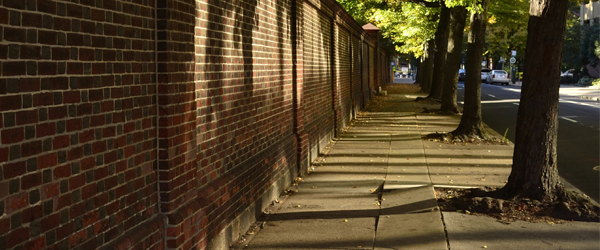
San Francisco was founded in 1776 and El Paso de Robles first established a post office in 1867, so both of the cities we operate offices in have a history to them and that brings with it old streets and often neglected, dangerous sidewalks (even neglected, dangerous roadways) in areas. In fact, looking for examples of images to use as broken sidewalks through the Internet made us realize how much easier it would be to go outside and snap a few photos to get better examples. In San Francisco, VisionZero is bringing attention to the “3 Es” of pedestrian safety: engineering, enforcement, and education. Engineering will of course take time and we must all keep that in mind, but education and enforcement are things we can all take part of each and every day to reduce pedestrian accidents.
We are all pedestrians each and every day, even if we only walk to and from our cars. Some people also ride bicycles or walk longer distances for health or to commute via public transportation. So taking notice of a dangerous sidewalk or roadway and reporting it can begin a process to prevent a future accident for anyone, even yourself if it’s on a route you travel frequently. Talking with a pedestrian accident lawyer is nearly always after an injury has occurred.
In San Francisco there is a mobile SF311 app to use for reporting road-related repairs as well as an online form for potholes and street/road defects. San Francisco uses separate forms for each item. In San Francisco, there is also a lot of information about getting your adjacent property sidewalk repaired here: http://sfpublicworks.org/sirp.
However, not all sidewalks belong to the City or County government. As pedestrian accident lawyers, we often must look at all addresses surrounding an accident or injury. California Streets and Highway Code section 5610 clearly states that a property owner specifically has a duty to maintain any sidewalk that fronts his or her property in a safe manner. Many cities have also adopted municipal ordinances consistent with California Streets and Highway Code section 5610, placing the burden of repair of sidewalks on the property owner. (E.g., Berk. Mun. Ord. § 16.04.010; San Luis Obispo Municipal Code § 12.16.020; Gonzales v. City of San Jose (2004) 125 Cal.App.4th 1127, 1137 [local ordinance expressly made landowners liable to members of public injured from unsafe conditions on abutting sidewalks].) In these situations, reporting the dangerous sidewalk is still the thoughtful thing to do. We have seen instances where the public entity has sent multiple notices to the property owner. There are also zoning and coding departments that you may call or write to if you know the address of the property owner and wish to escalate the matter to ensure notices are sent.
If you are beginning to review the sidewalks you encounter on a daily basis in your mind, think about the difference in elevation between the defects, breaks, or cracks. When reviewing cases as pedestrian accident attorneys, we’ve seen cases where differences of less than one inch have been considered “trivial” by the judge. Knowing that both San Francisco and Paso Robles are both kept very busy with road maintenance and repairs, you may find reporting defects in the sidewalk of less than a one-inch rise in elevation get placed at the bottom of the repair list. Your repair request may also be in a less-walked area and therefore a lower priority. In San Francisco, the Sidewalk Inspection and Repair Program (SIRP) inspects and repairs sidewalks throughout the City on a 25 year cycle prioritizing by a number of factors including pedestrian usage. Small defects can still be dangerous if unmarked and cause additional concerns for disabled pedestrians which we will address later, but if you look at the 12” defects in the sidewalks in Los Angeles, you’ll understand why some repairs might be first or last on the list.
Education and enforcement are two steps on the path to better pedestrian safety and the goal of eliminating traffic deaths within 10 years. Remember you play a big part in this!
San Francisco, CA — (ReleaseWire) — 10/14/2017 –Rahman Law PC announces the cancellation of their exhibit at Biketoberfest Marin on October 14, 2017 held in Fairfax, California. The Air Quality Index (AQI) reached an unhealthy 165 at 10:00 the morning of the event and was therefore cancelled by event coordinators Marin County Bicycle Coalition and Access4Bikes for health concerns. Biketoberfest Marin is a handmade bike show and brewfest event hosted by and benefiting the Marin County Bicycle Coalition and Access4Bikes inclusive of all varieties of cycling enthusiasts drawing over 5,000 attendees. This would have been Rahman Law PC’s eighth year supporting the event.
The cancellation of Biketoberfest Marin is due to the unhealthy air quality from the thousands of acres burned by the wildfires in Santa Rosa, Napa, and Sonoma. Ms. Rahman and so many others had continued their plans to attend Biketoberfest for some needed community spirit, but at this time a focus on health is needed when so much of the event is about an activity that uses the cardiovascular system. “Our thoughts and prayers go out to everyone affected by the fires right now. We thank the brave men and women out there fighting these fires working to save so many lives, too,” said Ms. Rahman. Shaana Rahman, principal and founder of Rahman Law PC, is a member and long-time sponsor of the Marin County Bicycle Coalition, sharing in their mission “to promote safe bicycling for everyday transportation and recreation,” as well as promote advocacy and “give cyclists a voice.” The Marin County Bicycle Coalition is also on a mission to build the bicycle community, which they do through events like Biketoberfest Marin.
Biketoberfest attracts mountain bikers (Fairfax, CA is regarded as the birthplace of the mountain bike), road cyclists, BMX riders, commuter cyclists, as well as fixie and cyclocross riders, just to name a few. Many cyclists are curious about their rights as a person who bikes and are eager to ask a bicycle accident attorney. Common questions from the cycling community include: what to do if you have a collision or incident on the road; how to talk to the police and lawyer; and what the options are for personal insurance coverage for people who bike.
During Biketoberfest Marin, Ms. Rahman and her team planned to engage participants in safety games and broadcast messages about why they love to ride using Facebook Live on the Rahman Law PC Facebook page (https://www.facebook.com/RahmanLawSF). Rahman Law PC’s Facebook page is a place for free tips about cycling rights, pedestrian rights, safety, and information about the advocacy work and speaking engagements of the bicycle accident attorneys of Rahman Law PC. It is also a place to find out about future workshops on learning about your rights as a person who bikes. The last “Know Your Rights” workshop Ms. Rahman gave was in conjunction with the San Francisco Bicycle Coalition on October 5th for Women Bike SF.
About Rahman Law PC
The personal injury lawyers at Rahman Law PC are powerful advocates for people who have been injured through no fault of their own with experience as bicycle accident attorneys. What makes Rahman Law PC different from other personal injury lawyers is they care about what happens to their clients; they aggressively advocate for their clients’ interests and have a personal relationship with each client, taking the time to listen and figure out solutions that make sense from a legal point of view but also from a human perspective. By providing the highest quality legal services to those who have been injured or have suffered wrongdoing at the hands of other individuals, corporations, or public entities, the personal injury lawyers and trial lawyers at Rahman Law PC have a proven track record of results and have successfully recovered millions of dollars for clients throughout California. Rahman Law PC offers clients attentive service backed with big firm experience, making them ready to take on any opponent. To learn more about the personal injury lawyers at Rahman Law PC, visit http://www.rahmanlawsf.com or call 415-956-9245 in San Francisco, 805-619-3108 in Paso Robles, California.
Back-to-School is a busy season for students and parents, but after the initial excitement starts to settle sometimes the tension boils over between students and we unfortunately begin to see the rise in physical and sexual assaults of students by other students while at school. We all want what is best for the children in our care and physical and sexual assaults should never be tolerated. When something more than pride is damaged, the assaulter, his/her parents, and the supervising teachers, school officials, school employees, and even the school district may be responsible. It is necessary to evaluate the situation which is why it is best to speak to a personal injury lawyer as soon as possible.
One of our most popular blog articles has been one about school district liability and student assaults.
Here are some tips and more details regarding liability in student-on-student assaults to help parents and guardians better understand the severity of the situation or to be more informed should something happen in the future:
Your child has an inalienable right to attend a safe, secure, and peaceful school environment.
A relationship has been established when a parent sends their child to school and the school district oversees all reasonable steps to protect its students. (Ed. Code § 48200)
Are the premises secure? In large school campuses there may be dangerous areas away from visibility of faculty and staff where a student may be sexually assaulted or injured. This may be a dangerous condition of public property.
The following excerpt has been taken from Shaana Rahman’s publication in Plaintiff Magazine, “Establishing School District Liability in Student-On-Student Assaults,” 2010:
Government Code section 840.2 provides that “[a]n employee of a public entity is liable for injury caused by a dangerous condition of public property if the plaintiff establishes that the property of the public entity was in a dangerous condition at the time of the injury, that the injury was proximately caused by the dangerous condition, that the dangerous condition created a reasonable foreseeable risk of the kind of injury which was incurred, and that either: (a) [t]he dangerous condition was directly attributable wholly or in substantial part to a negligent or wrongful act of the employee and the employee had the authority and the funds and other means immediately available to take alternative action which would not have created the dangerous condition; or (b) [t]he employee had the authority and it was his responsibility to take adequate measures to protect against the dangerous condition at the expense of the public entity and the funds and other means for doing so were immediately available to him, and he had actual or construction notice of the dangerous condition under Section 840.04 a sufficient time prior to the injury to have taken measures to protect against the dangerous condition.” (Gov. Code § 840.2.)
Your child will be supervised on campus in California.
“Every teacher in the public schools shall hold pupils to a strict account for their conduct on the way to and from school, on the playgrounds, or during recess.” (Ed. Code § 44807)
The following excerpt has been taken from Shaana Rahman’s publication in Plaintiff Magazine, “Establishing School District Liability in Student-On-Student Assaults,” 2010:
Pursuant to Cal. Code Regs., tit. 5, §5551 a principal is responsible for the supervision and administration of his/her school. Also, section 5552 provides, “[w]here playground supervision is not otherwise provided, the principal of each school shall provide for the supervision by certificated employees of the conduct and safety . . . of the pupils of the school who are on the school grounds during recess and other intermissions.” As many incidents occur during recess periods, this statute is particularly useful in establishing the parameters of the liability. The purpose of the foregoing laws is to regulate students’ conduct “so as to prevent disorderly and dangerous practices which are likely to result in physical injury to immature scholars.”
The school has a duty to inform you, the parent or guardian.
Failure to inform the parent/guardian can become compelling evidence of a failure to supervise when the school district claims they failed to inform on the grounds that they themselves did not know of the event(s). In many cases, this liability gives rise to an independent cause of action and is best handled by a personal injury lawyer for damages to the parent who may now no longer feel safe leaving their child in the hands of any other school or person for fear of their safety.
What to ask for
If you have concerns about an incident (or potential incident) at your child’s school, public record act requests have made it possible for you to access the information that will answer many of your questions. Additionally, you should know that consultations with a personal injury lawyer at RAHMAN LAW PC are free and confidential. Here are a few resources to ask for that may cover your concerns:
School policies on acceptable/unacceptable behavior between students
School employee safety training protocols
School training manuals/handbooks (which may outline the first two items)
Administrative regulations for the city/county (usually covers student safety)
Sexual Harassment or “Touching” policy
Disciplinary policies
Child abuse prevention training and policies
At RAHMAN LAW PC, we handle a variety of personal injury cases, but even the best personal injury lawyer in California may not have experience in student liability, which is why the best thing for any parent or guardian to do is start with a free and confidential consultation. We believe in taking the time to listen to our clients and we know when a child is involved the case is going to be emotional for you. Contact us today and find out for yourself why we have 10/10 ratings and founder Shaana Rahman was selected as the Best of San Francisco Magazine’s Top Women Attorneys in Northern California.
You don’t have to look very far on the Internet to find a case in California where a driver was distracted by their cell phone, usually texting, and hit a bicyclist or pedestrian and either killed them or catastrophically injured them. The California DMV has an FAQ page devoted to the Wireless Communications Device Law and Wireless Telephone Law. A surprising truth: these began in 2009 and 2008, respectively. As bicycle accident attorneys in San Francisco and Paso Robles, these laws are just a few of the things we stay up-to-date on for our clients because, sadly, distracted drivers are a contributor to collisions involving pedestrians and bicyclists.
According to the most recent report by the National Highway Traffic Safety Administration (NHTSA), distracted driving is increasing rapidly. They estimate 660,000 drivers are using electronic devices while driving per day (nationally) which caused 3,477 deaths in 2015. Are you one of these distracted drivers?
Think about this for a second – we are all pedestrians every day. We walk to and from our cars at the very least, and walk more in urban areas like San Francisco, which puts you at risk from someone driving while distracted. And if you ride a bicycle like we do (remember, we’re the attorneys who ride, too!), you’re at risk from someone veering off the road, even for a second or only by a couple of feet, but at the wrong second and colliding into you on your bike, right? Each year, San Francisco averages about four fatalities on bicycles each year due to vehicle collisions. Is that text message worth knowing you, a cyclist, hit or even killed another cyclist on the road for? Not likely.
So if you are a pedestrian (which you are) or if you are a cyclist, then why would you ever be part of the problem and risk creating a pedestrian or bicycle accident that might kill someone? Don’t be a distracted driver. We don’t ever want to see an electronic device in your hand while you’re driving (unless you’re dialing 911 because calling an emergency service is currently allowed without a “hands-free” device). And if you do see others driving distracted, it may be hard, but please don’t create an accident by trying to correct them. As bicycle accident attorneys, we want you to be safe!
San Francisco, CA — (ReleaseWire) — 07/20/2017 –In their continued dedication to advocacy towards reducing the number of bicycle accidents in San Francisco, Rahman Law PC announces returning sponsorship of Bike East Bay’s seventh annual Pedalfest held in Oakland at Jack London Square. Pedalfest is a festival free to all ages celebrating bicycles, cycling, family, food, and fun with live music on a pedal-powered stage. Keeping in-line with Bike East Bay’s mission of education, Pedalfest will also include opportunities for education and advocacy outreach.
Shaana Rahman, principal and founder of Rahman Law PC, is a member and frequent sponsor of Bike East Bay. The goals of Bike East Bay are advocacy, education, and community engagement. As bicycle accident attorneys in San Francisco, Rahman Law PC supports these goals as part of a mission to improve access and safety for bicycling as an integrated part of San Francisco’s transportation system. To further the advocacy of bicycle access and safety, Ms. Rahman is also a member and sponsor of the San Francisco Bicycle Coalition, the Marin County Bicycle Coalition, and Bike SLO County (formerly the San Luis Obispo County Bike Coalition).
Ms. Rahman has sponsored Pedalfest all seven years. She and members of the Rahman Law PC team will be participating at Pedalfest in Oakland to help raise awareness of safety through visibility and bicycle lights in particular this year. They will be offering a raffle of a Monkey Light from MonkeyLectric, a San Francisco bicycle wheel light company (http://www.monkeylectric.com). Rahman Law PC wants to help increase bicyclist visibility and talk to cyclists about other education and advocacy opportunities underway designed to decrease collisions between bicyclists and vehicles, including Vision Zero SF, the road safety policy with a mission to bring traffic deaths in San Francisco down to zero. Anyone interested in stopping by Rahman Law PC’s booth will also have the opportunity to Go Live on Facebook with them for a free messenger bag with the Rahman Law PC bicycle logo.
“We want to participate in events like Pedalfest with Bike East Bay where education and advocacy are promoted within the community because they generate a positive public image of bicyclists,” said Ms. Rahman. “Community involvement is crucial in making our streets safer to reduce bicycle collisions, which is why we believe in spending so much time advocating on behalf of bicyclists.” The bicycle accident attorneys at Rahman Law PC participate in City hearings, advocacy meetings, public events, and private speaking engagements to continue their work on making the streets safer for bicycles.
The personal injury lawyers at Rahman Law PC are powerful advocates for people who have been injured through no fault of their own with experience as bicycle accident attorneys. What makes Rahman Law PC different from other personal injury lawyers is they care about what happens to their clients; they aggressively advocate for their clients’ interests and have a personal relationship with each client, taking the time to listen and figure out solutions that make sense from a legal point of view but also from a human perspective. By providing the highest quality legal services to those who have been injured or have suffered wrongdoing at the hands of other individuals, corporations, or public entities, the personal injury lawyers and trial lawyers at Rahman Law PC have a proven track record of results and have successfully recovered millions of dollars for clients throughout California. Rahman Law PC offers clients attentive service backed with big firm experience, making them ready to take on any opponent. To learn more about the personal injury lawyers at Rahman Law PC, visit http://www.rahmanlawsf.com or call 415-956-9245 in San Francisco, 805-619-3108 in Paso Robles, California.
When we’re out at community events and a passerby grabs a business card off our table, they inevitably say “I hope I never need you.” Our response is always the same: “We hope you never need us.” It might seem weird to hear that personal injury lawyers in San Francisco actually would rather folks NOT be injured, but that’s how we roll. And we try to channel our optimism into practical community advocacy work to help make communities safer for you. The other thing we are known for is giving honest, straight-up advice about whether you really need to hire a personal injury lawyer if you are injured in a collision. If it’s the kind of personal injury accident case you can do on your own, we’ll tell you that and then take the time to walk you through the steps you need to take. That’s gratis. Why? Because it’s the right thing to do. We’re big on that. And in big cities like San Francisco we know it’s hard to find simple, real, honest advice. So here are a few tips to help you decide if hiring a personal injury lawyer is right for you.
Were you injured?
First, let’s define a “personal injury”. Obviously, it means an injury to your person. An injury can be physical, like a broken wrist, fractured ankle or torn ligaments, or psychological, like Post Traumatic Stress Disorder or anxiety. Often, people who have been involved in a car accident, bicycle accident, motorcycle accident or injured as a pedestrian have both physical and psychological injuries. If you were injured, then move to question 2. If you weren’t injured, but your property was damaged, stay tuned for the next part of our series which will take you through handling property damage claims.
Did someone else cause your injuries?
Were you hit by car, bus, taxi, Uber, or were you injured by someone else’s actions, like a passenger flinging their car door into traffic?
Did you incur damages?
Damages can be both economic like medical bills or lost wages and non-economic like the pain, suffering, anxiety and inconvenience that come with being injured.
If you answered “yes” to all 3 questions above, then the short answer is that you may have a claim against the person who injured you. This is when it can be best to start making phone calls to get free consultations with personal injury lawyers like us in San Francisco or Paso Robles. You may not know what damages to look for: past medical bills, medical bills for medical treatment you may need in the future, lost sick or vacation time from work, future time off from work you may need to heal from your injuries or for more medical treatment, or the type and severity of your injuries. These are all factors to consider when deciding if you need to hire a personal injury lawyer.
For example, if you were rear-ended by another car at low speed, went home were a little sore, saw your family doctor to get checked out and two weeks later you were back to 100%, this is the kind of thing you can do on your own directly with the other driver’s insurance company.
On the other hand, if you were taken by ambulance to the hospital or have more serious or complicated injuries, this is when to consider talking to a professional. Other deciding factors for clients in hiring a personal injury attorney include:
The pain and loss from the injury;
The financial insecurity as the medical bills stack up and income is lost;
The frustration when insurance companies don’t do the right thing; and
Wanting to have someone on their side, making sure the case is handled right from the start.
We hope we’ve given you a few things to think about but if you want our professional opinion on your case, we’re happy to talk to you, free of charge. Just keep in mind there are time limits for filing personal injury lawsuits (statutes of limitation) so it is usually better to seek help earlier rather than later. We like to do the heavy lifting for our clients straight away so this way they can focus on what’s really important–healing.
In 2014 (the most recent year with published statistics by the California Office of Traffic Safety as of May, 2017), San Francisco County has some serious motorcycle safety awareness statistics:
379 motorcyclists killed or injured in a collision
This puts San Francisco County at 1 of 58 for the OTS ranking which is how cities measure-up to other cities of similar populations.
At Rahman Law PC, we also have an office to represent motorcycle accident clients in San Luis Obispo County. This county ranks 29 of 58 on the OTS ranking with:
103 motorcycles killed or injured in a collision
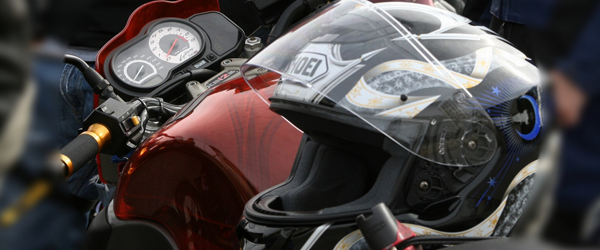
Why are we bringing up these statistics? Because May is National Motorcycle Safety Awareness Month! And this year we want to help raise awareness for safety to motorcycles, too! We are motorcycle accident lawyers in San Francisco and San Luis Obispo and safety starts with awareness, just like when we advocate for bicycle safety awareness.
What Can You Do For National Motorcycle Safety Awareness Month 2017?
If you ride a motorcycle or know someone who rides:
Get your helmet checked for age, damage, and fit – take it in to an authorized dealer.
Wear reflective gear and consider adding a new piece to honor National Motorcycle Safety Awareness Month.
Wear protective gear with armor and pads from head to toe.
Brush up your skills – Many motorcycle riding schools offer advanced riding courses.
If you are an automobile driver (4 wheels and not 2):
Remember to look twice – motorcycles can be harder to see in mirrors.
Watch turns – motorcycle blinkers often do not have automated “offs” like cars.
Give extra space – motorcycles can use their clutch to slow down before they brake which will not show you a brake light (until they do brake) giving you less time to stop.
Motorcycles can be a fun way to get around and in San Francisco an easier way to find parking. If you or a loved one enjoys motorcycle riding for commuting or for cruising, be sure to share these tips for a safe National Motorcycle Safety Awareness Month 2017 and let’s make every month a safer month for motorcycles and bicycles. Until Vision Zero becomes a reality in San Francisco and hopefully San Luis Obispo, too (vision zero means zero traffic deaths and was adopted to safety policy by the City and County of San Francisco in 2014), remember that the personal injury attorneys at Rahman Law PC are here for you whether you need a motorcycle accident lawyer, bicycle accident attorney, or other personal injury counsel, contact us today.
The information you obtain at this site is not, nor is it intended to be, legal advice. You should consult an attorney for advice regarding your individual situation. RAHMAN LAW PC is unable to identify which statute of limitation will apply without a thorough review of your potential case. Therefore, the information contained on this website does not constitute legal advice. Statutes of limitation change as new laws are passed. You should consult with a lawyer immediately to fully evaluate your case.
You should not act or rely on information in this website without seeking the advice of an attorney. We invite you to contact us and welcome your calls, letters and electronic mail. Contacting us does not create an attorney-client relationship. Please do not send any confidential information to us until such time as an attorney-client relationship has been established.
RAHMAN LAW PC does not offer any guarantee of case results. Past success in litigation does not guarantee success in any new or future lawsuit. The information contained within this website does not constitute a guarantee, warranty or prediction regarding the outcome of your legal matter.
To the extent the State Bar rules require us to designate a principal office and/or single attorney responsible for this site, RAHMAN LAW PC designates Shaana Rahman as being the attorney responsible for the site. Ms. Rahman can be reached at 177 Post Street, Suite 750, San Francisco, California 94108, 415.956.9245.
By sending an email through this website (rahmanlawsf.com), you are providing us with your email address and permission to contact you via email. You may unsubscribe to our email communications at any time using the link provided in the email communication.

 San Francisco, CA — (ReleaseWire) — 10/14/2017 –Rahman Law PC announces the cancellation of their exhibit at Biketoberfest Marin on October 14, 2017 held in Fairfax, California. The Air Quality Index (AQI) reached an unhealthy 165 at 10:00 the morning of the event and was therefore cancelled by event coordinators Marin County Bicycle Coalition and Access4Bikes for health concerns. Biketoberfest Marin is a handmade bike show and brewfest event hosted by and benefiting the Marin County Bicycle Coalition and Access4Bikes inclusive of all varieties of cycling enthusiasts drawing over 5,000 attendees. This would have been Rahman Law PC’s eighth year supporting the event.
 Back-to-School is a busy season for students and parents, but after the initial excitement starts to settle sometimes the tension boils over between students and we unfortunately begin to see the rise in physical and sexual assaults of students by other students while at school. We all want what is best for the children in our care and physical and sexual assaults should never be tolerated. When something more than pride is damaged, the assaulter, his/her parents, and the supervising teachers, school officials, school employees, and even the school district may be responsible. It is necessary to evaluate the situation which is why it is best to speak to a personal injury lawyer as soon as possible.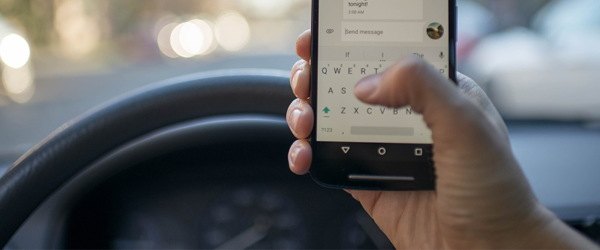
 San Francisco, CA — (